
Buying a shipping container is an exciting investment, whether you need secure residential storage, construction site organization, agricultural equipment protection, or commercial inventory space. But before your container arrives, it’s important to understand one critical part of the process:
At Steel Ridge Containers, one of the most common questions we hear from customers is:
“What do I need to do before my shipping container is delivered?”
The good news is that container delivery is usually straightforward when your property is properly prepared. In this guide, we’ll walk you through everything you should know before delivery day so your container placement goes smoothly and safely.
Why Shipping Container Delivery Preparation Matters
Shipping containers are large, heavy steel structures that require specialized equipment to transport and unload.
A properly prepared delivery site helps:
- Prevent delivery delays
- Protect your property
- Ensure safe unloading
- Avoid additional fees
- Make placement more accurate
Taking a little time to prepare beforehand can save major headaches later.
Understanding Shipping Container Delivery Equipment
Your delivery method depends on:
- Container size
- Property access
- Ground conditions
- Placement requirements
Common Delivery Types:
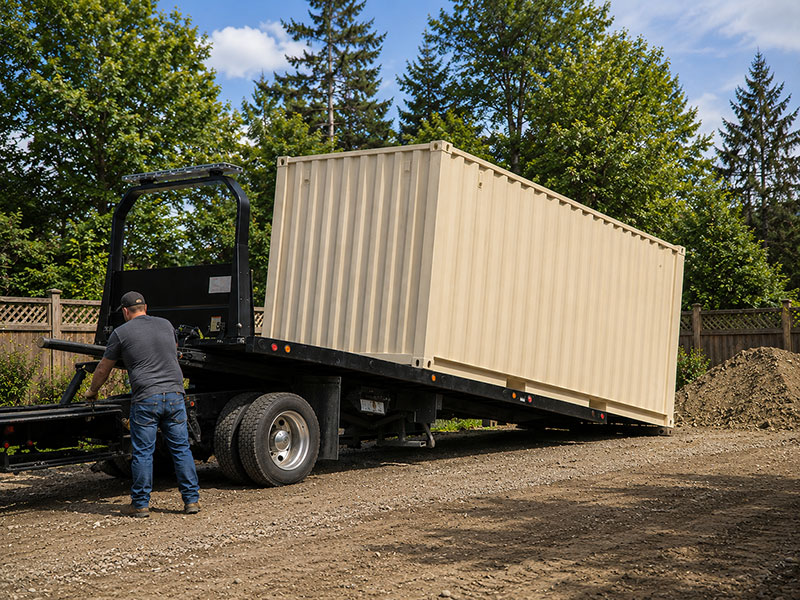
Tilt-Bed Delivery
Most common for residential deliveries. The trailer tilts while the container slides gently onto the ground.
Rollback Delivery
Often used for tighter placement situations and shorter containers.
Crane Delivery
Used when containers must be placed over fences, buildings, or in difficult locations. Be sure to tell us if you have any obstacles that require a crane, as this will determine the type of delivery vehicle and the delivery final costs.
Delivery Space Requirements
One of the biggest mistakes buyers make is underestimating how much room delivery trucks need.
Typical Space Requirements for a 20′ Container:
- 50–60 feet of straight clearance
- Approximately 12 feet of width
- Adequate overhead clearance
Typical Space Requirements for a 40′ Container:
- 80–100 feet of straight clearance
- Larger turning radius
- More unloading space
Remember, the delivery truck itself is much longer than the container.
Watch for Overhead Obstacles
Overhead clearance is one of the most important factors during delivery.
Common Obstacles Include:
- Tree branches
- Power lines
- Low-hanging cables
- Carports
- Roof overhangs
Delivery trucks need significant vertical space during unloading because the trailer tilts upward while placing the container.
If overhead obstacles are present, discuss them before scheduling delivery.
Ground Conditions Matter
Shipping containers are extremely heavy.
Approximate Empty Weights:
- 20′ Container: Around 5,000 pounds
- 40′ Container: Around 8,000 pounds
Soft or unstable ground can create serious delivery problems.
Avoid Delivery Onto:
- Mud
- Loose sand
- Saturated soil
- Snow or ice
- Steep slopes
Best Ground Surfaces:
- Compacted gravel
- Concrete pads
- Asphalt
- Firm, level dirt
Stable ground helps prevent settling and keeps the container level after placement.
Prepare a Proper Foundation
A level foundation is essential for long-term container performance.
Popular Foundation Options:
- Gravel pads
- Concrete slabs
- Railroad ties
- Concrete piers
- Compacted road base
A proper base helps:
- Keep doors aligned
- Improve drainage
- Reduce rust risk
- Prevent settling
Even slight unevenness can cause container doors to become difficult to open and close.
Plan the Container Orientation Carefully
Before delivery day, decide:
- Which direction the doors should face
- How you’ll access the container
- Future expansion plans
- Vehicle access needs
Questions to Consider:
- Will you need to drive equipment into the container?
- Do you need easy daily access?
- Should doors face away from weather exposure?
- Will another container be added later?
Once the container is placed, repositioning it can require additional equipment and expense.
Consider Drainage Around the Container
Good drainage helps extend the lifespan of your container.
Drainage Tips:
- Avoid low-lying areas
- Keep water flowing away from the container
- Elevate slightly above surrounding grade
- Use gravel to reduce standing water
Moisture buildup around the container can accelerate rust and create muddy access conditions.
Communicate Clearly With Your Delivery Team
Before delivery, it’s helpful to provide:
- Photos of the site
- Driveway measurements
- Access road details
- Information about slopes or obstacles
- Preferred placement location
The more information your delivery team has, the smoother the process will be.
At Steel Ridge Containers, we always encourage customers to ask questions beforehand so there are no surprises on delivery day.
Common Delivery Mistakes to Avoid
Avoid These Common Problems:
- Not measuring access roads
- Ignoring overhead clearance
- Choosing soft ground placement
- Forgetting turning radius requirements
- Placing too close to structures
- Skipping foundation preparation
Simple preparation can prevent expensive repositioning or failed delivery attempts.
Final Thoughts
Shipping container delivery is usually quick and straightforward when your property is properly prepared. Understanding access requirements, ground conditions, foundation preparation, and placement planning will help ensure a smooth and successful delivery experience.
At Steel Ridge Containers, we help customers nationwide prepare for safe, efficient container delivery. Whether you need a compact residential storage container or a large commercial unit, our team is here to help guide you through the process from start to finish.
With the right preparation, your new container can be delivered safely, placed correctly, and ready to serve your storage needs for years to come.